The Critical Role of “Condition as Found” in the Calibration Process
The “Condition as Found” step is one of the most important — and most overlooked — elements of the calibration process. It determines whether a measurement device was functioning correctly before calibration and whether any product measured with that device is now suspect. Most organizations fail at this step, exposing themselves to significant quality, traceability, and compliance risks.
What Is “Condition as Found”?
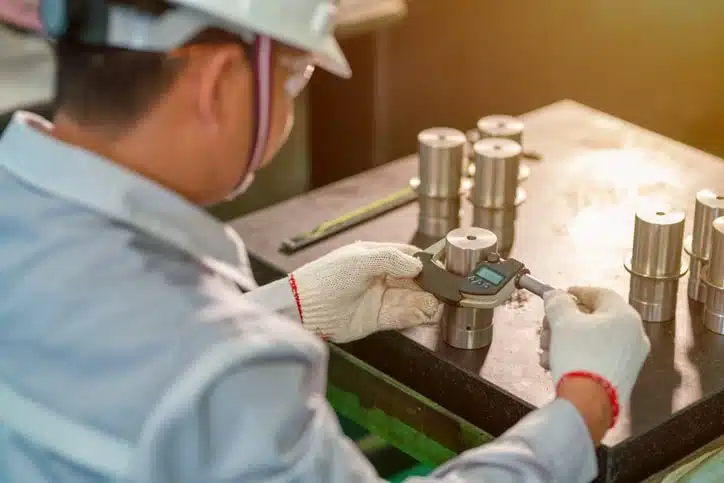
“Condition as Found” is the initial evaluation performed during calibration to determine whether a device is within the manufacturer’s specified tolerances before any adjustments are made.
This step answers the most critical question in calibration:
Was the device accurate the last time it was used?
If the device is found out of tolerance, every product measured with that device since its last known good calibration may be suspect — and must be evaluated for potential nonconformance.
A comprehensive Calibration Management Software solution records every calibration event, maintains complete equipment history, and provides the traceability needed to identify potentially affected products when a device is found out of tolerance.
For a deeper overview of calibration fundamentals, see our Understanding Calibration Management Systems.
For guidance on evaluating risk when a device is out of tolerance, see Out‑of‑Tolerance Impact Assessment.
Why “Condition as Found” Matters
When a device is out of tolerance, it means:
- Measurements taken with that device may be incorrect
- Products may have been accepted or rejected based on inaccurate data
- Entire production lots may be at risk
- Regulatory compliance may be compromised
- Customers may receive nonconforming product
This is why ISO 9001, AS9100, and ISO/IEC 17025 emphasize traceability, calibration status, and documented evidence of measurement integrity.
Organizations implementing a complete AS9100 Quality Management System must demonstrate control over monitoring and measuring equipment while maintaining documented evidence that measurement results remain valid throughout the calibration cycle.
For related inspection requirements, see our Inspection & NCMR Software.
For a full integration overview, see How Calibration Integrates With Inspection & NCMR.
Without proper condition as found calibration procedures, organizations cannot identify suspect product or maintain ISO‑required traceability.
Where Most Companies Fail
Despite its importance, “Condition as Found” is one of the most poorly executed steps in the calibration process. The most common failures include:
1. Not Identifying Which Device Was Used
Most companies do not record the specific calibrated device used during inspection or measurement. Unless there is only one possible device, traceability is lost.
Modern organizations solve this challenge by integrating calibration records with inspection, production, and quality records so every measurement can be traced back to the exact instrument, operator, work order, and inspection result.
This makes it impossible to determine which products are affected when a device fails calibration.
2. Not Reviewing the Calibration Certificate
Companies that use third‑party calibration services often file the certificate without reviewing the “Condition as Found” section.
Many never notice that a device was returned out of tolerance.
3. No Process for Evaluating Suspect Product
When a device fails calibration, organizations must:
- Identify all products measured with that device
- Determine pass/fail criteria
- Quarantine suspect product
- Perform re‑inspection or re‑testing
Most companies do not have a system capable of performing this level of traceability.
4. No Link Between Calibration Records and Production Records
Without integrated calibration and inspection data, companies cannot trace measurement device usage back to specific work orders, lots, or serial numbers.
This is where integrated QMS platforms such as our QA Suite provide a major advantage.
To understand how modern systems prevent these failures, see Understanding Calibration Management Systems.
Why This Creates Serious Risk
Failing to evaluate “Condition as Found” can lead to:
- Undetected nonconforming product in the field
- Costly recalls or rework
- Loss of customer trust
- Major audit findings
- Regulatory noncompliance
In aerospace, medical, and defense industries, this can escalate to safety risks and legal liability.
Effective quality systems immediately initiate Corrective Actions (CAPA) whenever recurring calibration failures indicate systemic process issues that require root-cause analysis.
For related risk‑reduction strategies, see our Access Corruption Prevention Guide.
For broader QMS risk‑reduction strategies, see Quality Management in Manufacturing.
How Calibration Management Software Solves the Problem
Modern calibration management software eliminates the guesswork and manual effort by providing:
- Automatic recording of the exact device used during each inspection
- Linking calibration records to production records for full traceability
- Immediate flagging of out‑of‑tolerance devices
- Identification of all affected products since the last known good calibration
- Automated suspect product evaluation workflows
- Audit‑ready documentation for ISO and customer audits
When calibration, inspection, and nonconforming material records share the same database, organizations can instantly determine which inspections, work orders, serial numbers, or customer shipments were affected by an out-of-tolerance instrument.
This is where most companies fail — and where the right software provides a measurable competitive advantage.
Explore our solution: Calibration Management Software
Learn how these modules work together in Quality Management in Manufacturing.
Why Open‑Source Microsoft Access + SQL Server Express Is the Ideal Platform
Your calibration process requires flexibility, traceability, and integration with production data. An open‑source Microsoft Access front‑end with a SQL Server Express back‑end provides:
- Customizable workflows for “Condition as Found” evaluation
- Scalable data storage for calibration history and traceability
- Multi‑user performance for technicians, inspectors, and quality engineers
- Integration with inspection, NCMR, and production modules
- Low cost with enterprise‑grade reliability
This architecture supports the full lifecycle of calibration, inspection, and traceability — something most off‑the‑shelf systems cannot do.
Because the system is fully customizable, organizations can tailor calibration workflows, approval processes, notifications, reporting, and traceability requirements without being constrained by proprietary software limitations.
Learn more about our Custom Microsoft Access Development services for calibration and quality management applications.
For platform guidance, see our Access → SQL Server Migration Guide.
For hybrid architecture guidance, see SQL Server Integration for Microsoft Access.
A structured "condition as found" calibration process ensures full traceability, protects customers, and prevents costly nonconformance issues.
Conclusion
“Condition as Found” is one of the most critical steps in the calibration process — and one of the most overlooked. Without proper evaluation and traceability, companies risk releasing nonconforming product, failing audits, and compromising safety.
Calibration management software ensures that every device, every measurement, and every product is fully traceable — protecting your business from costly mistakes and strengthening compliance.
Organizations that properly document "Condition as Found" gain far more than audit compliance—they gain confidence that every inspection decision, product release, and customer shipment is supported by accurate, traceable measurement data.
For a complete overview of calibration workflows, see What Is Calibration Management?.
Strengthen Your Calibration Process
Our Calibration Management Software provides full traceability, automated “Condition as Found” evaluation, and seamless integration with inspection and production processes.
Learn More About Our Calibration Software