
Best Practices for Managing Measuring Devices in Manufacturing
Measuring device calibration best practices form the foundation of accurate measurement in manufacturing. In both production and service environments, precise measurement ensures products meet specifications and customer requirements. Calibration is the ongoing process that keeps measuring devices accurate, reliable, and traceable throughout their lifecycle.
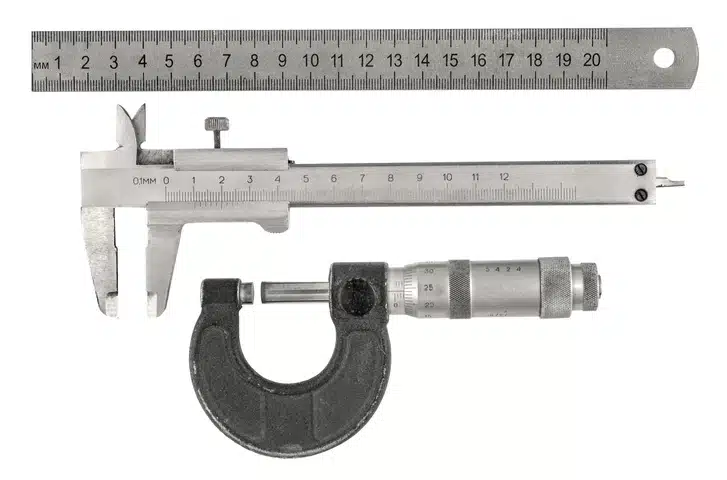
What Is Measuring Device Calibration?
Measuring device calibration is the process of comparing a measuring instrument against a certified reference standard to verify its accuracy. If the device falls outside acceptable tolerances, it is adjusted, repaired, or removed from service until it can be recalibrated.
Calibration helps manufacturers ensure that dimensional measurements, pressure readings, temperatures, torque values, and other critical inspections remain accurate and traceable. Proper calibration reduces the risk of defective products, customer complaints, and costly recalls while supporting compliance with ISO 9001:2015 and AS9100 quality management standards.
Modern calibration management software automates scheduling, maintains calibration histories, stores certificates, and provides complete traceability for every measuring device used throughout production.
Why Measuring Devices Matter in Manufacturing
Measuring devices are the foundation of quality control. As your uploaded document states, “accurate measurement is a fundamental step toward delivering quality products and services.”
These tools ensure that every dimension, tolerance, and specification is verified correctly. From machining to inspection to final acceptance, measuring devices support every stage of production.
Measuring devices are used throughout receiving inspection, in-process inspection, and final inspection. They also support Inspection Control Plans, ensuring inspectors use the correct measurement methods at every production stage.
Common Measuring Devices
- Calipers
- Micrometers
- Pin gauges
- Height gauges
- Feeler gauges
- Pressure gauges
- Angle and radius gauges
- Thermocouples
- Surface plates
- Borescopes
- Torque meters
Each device plays a unique role in ensuring that products meet engineering and customer requirements.
How Measuring Devices Are Used in Manufacturing
Measuring devices verify that parts meet drawing specifications. Your document provides a clear example: “Customer drawing specifies a hole depth of 0.250 inches with a tolerance of +/- 0.005 inches.”
Typical Measurement Workflow
- Select the correct calibrated device
- Verify calibration status
- Measure the feature
- Record the measurement
- Compare to tolerance
- Document device ID for traceability
Inspection records should remain fully traceable to the work order, inspector, measuring device, and inspection results. Integrated Inspection & Non-Conforming Material Software makes this process significantly easier while supporting audit readiness.
This process ensures accuracy and provides a complete audit trail for every inspection.
Why Calibration Is Essential
Following measuring device calibration best practices ensures that every tool performs within its intended accuracy range and supports consistent inspection results.
What Happens During Calibration?
- Device is compared to a certified standard
- “As-found” condition is recorded
- Adjustments are made if out of tolerance
- “As-left” condition is documented
- Calibration certificate is issued
If a device is found out of tolerance, all products measured with it since the last calibration may require review — a major risk for manufacturers.
When measuring devices fall outside acceptable tolerances, manufacturers often perform impact assessments to determine whether previously inspected products require additional review. These investigations frequently generate Corrective Actions (CAPA) and may trigger additional inspections or customer notifications.
Best Practices for Managing Measuring Devices
Organizations that follow measuring device calibration best practices reduce risk, improve traceability, and maintain compliance with ISO 9001 and AS9100.
1. Identify All Measuring Devices
Every device must be labeled as calibrated or “for reference only.” Expired devices must never be used for inspection.
2. Define Inspection Points Clearly
Routers and travelers should specify the exact device required for each inspection point.
3. Record the Device Used for Every Inspection
This ensures traceability if a device is later found out of tolerance.
4. Use Inspection Software
Software within the Quality Management Suite allows inspectors to quickly select calibrated devices and automatically log usage.
5. Use Calibration Management Software
When a device is calibrated, the “as-found” condition is recorded. If out of tolerance, the system can instantly identify all inspections performed since the last calibration.
Calibration records should also reference the procedures, work instructions, and inspection methods used during calibration. Storing these documents within a centralized Document Management System ensures technicians always work from the latest approved revision.
6. Ensure Calibration Standards Are Also Calibrated
Standards such as dowel pins, gauge blocks, and master rings must be calibrated and traceable to national standards.
Calibration Standards and Traceability
Calibration requires certified reference standards. Your document notes that dowel pins are commonly used to verify calipers and other devices. These standards must be:
- Calibrated regularly
- Traceable to national standards
- Documented with expiration dates
- Verified before disposal
If a standard is out of tolerance, every device calibrated with it becomes suspect — and all related inspections may require review.
Organizations should periodically verify their calibration process through scheduled Internal Audits to confirm measuring devices, calibration standards, and documentation remain compliant with quality system requirements.
In many industries, calibration is not only a best practice but a regulatory requirement. Aerospace, medical device, automotive, and defense manufacturers must demonstrate full traceability of every measuring device used during inspection. This includes calibration dates, as‑found conditions, standards used, and documented results. Maintaining this level of control ensures that every measurement is defensible during audits and customer reviews.
Calibration Requirements for ISO 9001 and AS9100
ISO 9001:2015 and AS9100 require organizations to monitor and measure products using equipment that is suitable for its intended purpose and maintained to ensure valid results. This includes identifying measuring devices, establishing calibration intervals, maintaining calibration records, and protecting equipment from damage or unauthorized adjustment.
An effective calibration program demonstrates compliance during audits while providing confidence that inspection results remain accurate and repeatable throughout production.
- Unique identification for every measuring device
- Scheduled calibration intervals
- Traceability to certified standards
- Calibration certificates and historical records
- Impact analysis for out-of-tolerance equipment
Calibration is one component of a complete Quality Management System. When integrated with Inspection, Corrective Actions, Document Control, Employee Training, and Internal Auditing, manufacturers gain complete visibility into their quality management processes.
Benefits of Calibration Management Software
As organizations grow, spreadsheets and manual tracking quickly become difficult to maintain. Calibration Management Software centralizes equipment records, automates calibration schedules, stores certificates, and provides complete traceability for every measuring device.
- Automatic calibration reminders
- Centralized equipment database
- Calibration certificate storage
- Equipment status tracking
- Out-of-tolerance investigations
- Inspection traceability
- Audit-ready reporting
Conclusion
By implementing strong measuring device calibration best practices, manufacturers can improve product quality, reduce defects, and strengthen customer confidence.
Ready to modernize your calibration process? Explore our Calibration Management Software to see how automation and traceability can transform your quality system.
Frequently Asked Questions About Measuring Device Calibration
How often should measuring devices be calibrated?
Calibration frequency depends on manufacturer recommendations, usage, environmental conditions, regulatory requirements, and historical performance. Many organizations establish annual calibration intervals, while frequently used devices may require more frequent verification.
Why is calibration traceability important?
Traceability allows manufacturers to identify every inspection performed with a specific measuring device. If a device is later found out of tolerance, affected products can be identified quickly for review.
Can calibration records be managed electronically?
Yes. Calibration Management Software stores calibration histories, certificates, due dates, equipment status, and supporting documentation while automating reminders and reporting.
Built for Real Manufacturing Environments
Our Calibration Management Software has been developed through years of working with aerospace, electronics, contract manufacturing, precision machining, and other quality-driven organizations. The software is designed to simplify compliance while remaining flexible enough to adapt to each manufacturer's calibration procedures, inspection methods, and quality management system.
Improve Your Calibration and Inspection Process
Our integrated QMS platform streamlines calibration, inspection, nonconformance management, corrective actions, document control, and training — all in one system.
Book a Live Demo